- The Fan Pulse
- Posts
- India's Heartland: The Premier League's Final Frontier
India's Heartland: The Premier League's Final Frontier
Small-town India is football's fastest-growing audience — yet the Premier League's engagement is still metro-first. Here are the gaps and the growth levers no one is talking about

Nilesh Deshmukh
November 17, 2025

💌 Welcome to Game Plan India by The Fan Pulse
Game Plan India is a limited edition series of Fan Engagement topics, which are my commentary and opinions on how International Sports Rights Holders must approach fans in India. The articles are my reflections on how the market has evolved after 8 years of working with Chelsea FC, Arsenal FC, Manchester United, Real Madrid, Sevilla, MLB, and more, with their fan engagement in India.

PREMIER LEAGUE IN INDIA
14 Gaps the Premier League can unlock to grow fandom in small towns & villages
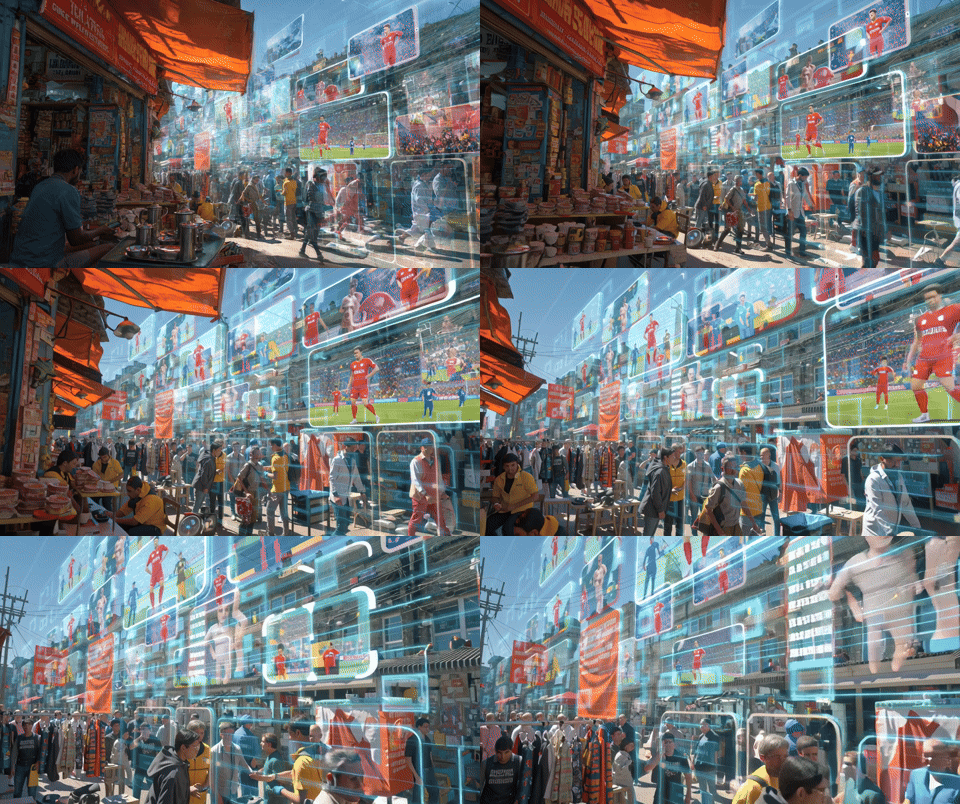
Look, here's the thing: India's small towns and villages are sitting on the Premier League's biggest opportunity right now. We're talking about places where football passion is genuinely taking off, where digital access is finally catching up, and where young people aren't just defaulting to cricket anymore. But here's the problem: the Premier League's fan ecosystem in India is still stuck in big-city mode: English-heavy, streaming-dependent, and basically ignoring where the real growth is happening.
So let's dig into the opportunities the Premier League are sleeping on — the ones that could turn millions of rural and semi-urban Indians into proper, lifelong Premier League fans.
1) Low internet access & low-bandwidth content
Why it matters: Loads of rural India still don't have reliable internet. People are using basic smartphones or even feature phones. When your whole strategy depends on streaming, you're locking out a massive audience before they even get started.
What they should actually do:
Make tiny, ultra-lightweight clips (30–60 seconds) that work on 2G/3G networks. Share them through WhatsApp forwards and set up IVR services where people can literally call in to hear match highlights.
Team up with local cable operators and community centres to show match highlights on local screens. Think community viewing nights — low-cost, high-impact.
Create an SMS or voice-based "match summary" service in regional languages for people who don't even have smartphones yet.
2) Language & cultural localisation is underutilised
Why it matters: English-first content completely misses millions of people who'd rather consume stuff in Hindi, Bengali, Tamil, Telugu, Marathi, Kannada, you name it. Regional language users are absolutely massive in India, but they're being ignored.
What they should actually do:
Launch quick match-moment shows with regional presenters and get them out on local FM radio and WhatsApp. Make it feel local, not like something beamed in from London.
Localise social media properly - not just translations, but actual regional memes, player stories tied to local festivals, stuff that actually resonates culturally.
3) Physical distribution & merchandising gaps in Tier-2/3 markets
Why it matters: Official merchandise and fan experiences are almost entirely focused on big cities. If you're in a small town, good luck finding an official shirt or even a basic scarf. There's just no distribution.
What they should actually do:
Send out touring "fan buses" that hit district markets and college towns during big fixtures. Pop-up merchandising that actually comes to people.
License local apparel manufacturers and small retailers to make affordable, regionally styled fan gear. Not everyone can afford £70 for an official shirt.
Use local festivals and markets to sell culturally tailored merch — match scarves with local designs, that sort of thing.
4) Limited grassroots football touchpoints that convert neutral sports fans to PL fans
Why it matters: The Premier League does run youth programs like Premier Skills, but there aren't nearly enough visible connections that actually turn grassroots football participants into Premier League fans, especially in small towns.
What they should actually do:
Expand Premier Skills into district-level tournaments where teams represent actual PL clubs. Winners get virtual calls with players or matchday prizes.
Create "Village Premier Days" where community tournaments get streamed regionally and the winners feature on official PL channels.
Give local schools and clubs ready-made toolkits — templates, posters, social media content — so they can run their own fan engagement activities.
5) Weak local partnership with Indian clubs/leagues and creators in smaller markets
Why it matters: Most partnerships focus on major cities. But if you actually build visible connections with regional clubs, colleges, and local creators, you build genuine trust and fandom in communities that matter.
What they should actually do:
Co-host exhibition matches or coaching camps with local clubs and district associations. Make it Premier League-branded but locally rooted.
Activate regional creators and micro-influencers — football coaches, ex-players, local sports voices — and give them micro-grants to produce Premier League content in local languages.
Sponsor district youth leagues and make player/legend visits a regular thing, not once-in-a-decade PR events.
6) Broadcast scheduling & discovery friction (timezones & clutter)
Why it matters: Live Premier League matches kick off at weird times for India, and casual viewers in small towns have no easy way to discover key moments without committing to full 90-minute watches.
What they should actually do:
Create curated "best minutes" packages from big matches and release them at local prime times. Push them via radio, local cable, and WhatsApp.
Work with regional broadcast partners to highlight a "match of the week" on affordable DTH channels during evening slots when people are actually home.
Distribute simple weekly schedules in local languages — printed flyers or voice notes shared through local shops, schools, and clubs. Just tell people when to tune in.
7) Lack of visible local role models and women's engagement
Why it matters: Female viewership and participation in programs are basically underdeveloped outside urban India. If you want families and young girls to care about football, you need relatable role models and inclusive programming.
What they should actually do:
Run female-focused community programs — girls' coaching scholarships, school matches — and amplify the success stories from small towns on regional media.
Create family viewing initiatives with templates for schools and communities: match nights with penalty shootout games, quizzes, and prizes. Make it accessible and fun.
Partner with local women's football initiatives and put women commentators and hosts front and centre in regional content.
8) Underuse of FM Radio as a Mass-Reach, Low-Cost Fan Funnel
Why it matters: FM radio reaches hundreds of millions of people across rural and semi-urban India. The Premier League barely touches it beyond occasional big-city sports mentions. That's a massive missed opportunity.
What they should actually do:
Launch daily "Premier League Minute" bulletins in Hindi, Bengali, Tamil, Telugu across regional FM stations.
Run match-week story capsules narrated by local radio jockeys to build familiarity and ritual.
Create radio quizzes and call-in contests with prizes like club merchandise or OTT passes. Make it interactive.
9) Weak Mobile-First Ad Targeting for Rural Fans
Why it matters: Rural fans spend most of their digital time on WhatsApp, YouTube, ShareChat, Moj, and basic browsers — not English-first apps or high-data social platforms. But that's not where the Premier League is showing up.
What they should actually do:
Run click-to-WhatsApp campaigns with short match explainers in vernacular languages.
Deploy 2G/3G-friendly ads — static images or 6–10 second clips optimised for low bandwidth.
Use AI-based audience targeting on YouTube and Meta to reach cricket fans who might be open to football.
10) Lack of Hyper-Local Digital Content Feeds
Why it matters: Premier League pages operate at a pan-India level, but small-town audiences need local context, local humour, and voices they actually recognise and trust.
What they should actually do:
Build regional digital feeds on Instagram, YouTube Shorts, ShareChat, and Moj with locally relevant content.
Work with local creators to make explainers, festival tie-ins, and community challenges that feel genuinely local.
Deploy "micro-rosters" of regional creators across 10–12 states who create short-form content every week.
11) No Structured WhatsApp Content Strategy
Why it matters: WhatsApp is the number one media channel in small towns, but the Premier League doesn't use WhatsApp Channels, chat-based quizzes, or community alerts at any real scale.
What they should actually do:
Launch a Premier League India WhatsApp Channel with match reminders, voice notes, stickers, and short highlights.
Use WhatsApp "micro-groups" with local volunteers in colleges and communities to circulate content organically.
Send out festival greetings, local memes, and club storylines in vernacular languages. Keep it conversational.
12) Low Engagement in Short-Form Video Ecosystem
Why it matters: Short-form video — YouTube Shorts, Reels, Moj, Josh — absolutely dominates content consumption in rural India. But Premier League content is still global, not hyper-local.
What they should actually do:
Release regional remix packs of match moments specifically for creators to use.
Create daily 15-second rituals like "Goal of the Day" or "Fan of the Week."
Produce village-to-Premier League stories featuring local football talent, influencers, and fans. Make it aspirational and relatable.
13) Missed Opportunity in Digital Out-of-Home (DOOH) in Tier-2/3 Bus Stands & Markets
Why it matters: Digital screens in small-town bus stands, railway stations, and market complexes are now pretty common. Cricket dominates them. The Premier League? Nowhere to be seen.
What they should actually do:
Run "This Weekend in the Premier League" short loops on DOOH networks in 100+ districts.
Add QR codes that trigger WhatsApp journeys so people can join local Premier League communities.
Highlight Indian-origin fans, kids from Premier League school programs, and local creator content. Make it feel local.
14) Lack of Localised Community Influencer Strategy
Why it matters: Village-level influencers — local sports teachers, kabaddi players, district footballers — have way more trust than metro-based influencers. But they're not being activated.
What they should actually do:
Build a "PL Local Heroes Network" of 500 micro-creators across small towns.
Give them seasonal content kits: posters, reels templates, and regional player bios. Make it easy for them to create.
Turn school sports teachers into Premier League Ambassadors who run weekly club challenges with their students.
The Bottom Line
The Premier League has already done a solid job building a base in India, but the next wave of growth isn't coming from Mumbai or Bangalore — it's coming from district towns, tier-3 markets, and villages where football is quietly but rapidly growing.
By activating radio, lightweight digital content, hyper-local storytelling, local creators, and community-first experiences, the Premier League can build something culturally rooted and genuinely sticky across India's heartland.
The prize here is huge: generational fans who discover the Premier League not through some big broadcast campaign, but through a local voice, a relatable creator, or a moment shared in their own community.
And honestly? That's how real, lasting global fandom gets built.
If you liked this article, do read/subscribe to/my sportsnexus newsletter, where I write about the cultural angle of sports business, regional features, quick takes and more.

📬 Want More?
Next week’s feature: Concrete and tactical plan to get new fans. Stay subscribed, stay ahead.
✍️ Curated by Nilesh Deshmukh
For the past decade, I’ve explored how sports and culture inspire fan passion — and how to turn that passion into deeper engagement. From the Indian sports business to global football, cricket, and music projects, I share practical insights to help others connect with fans in meaningful ways. Nilesh Deshmukh |
